
What can we help you find?

Edit Template
  • By Henry Miller

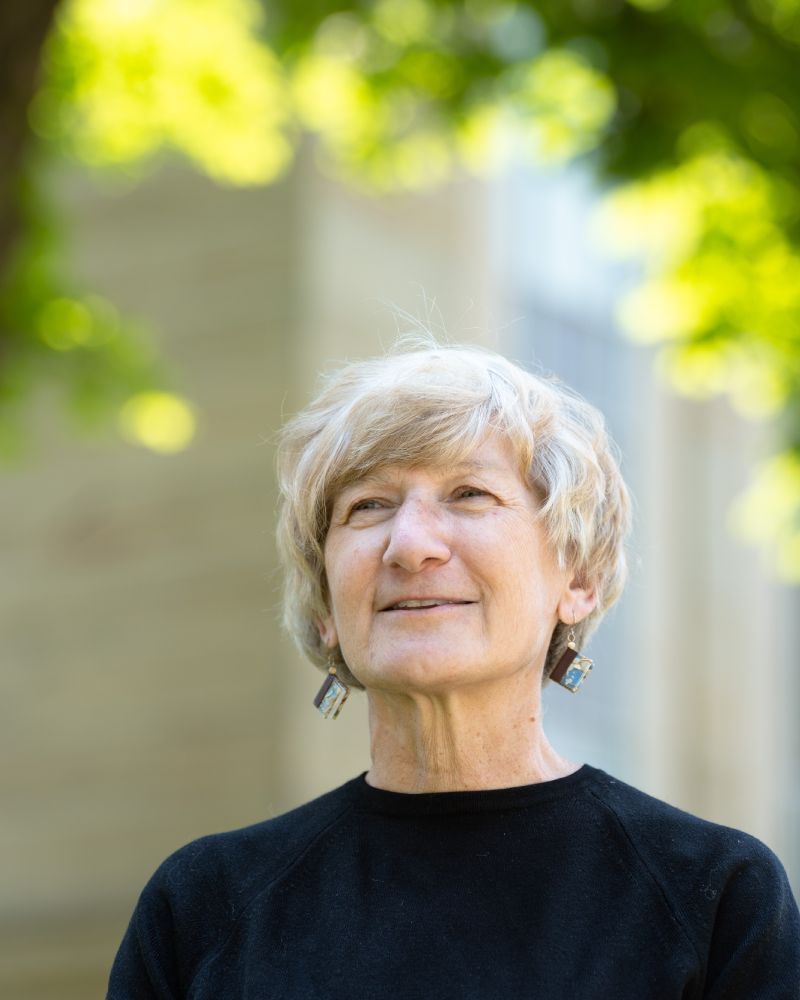
Sue Schaper

I occasionally describe literature as articulation of human experience.  Of course an array of disciplines has emerged to explore particular dimensions of human experience,  and the creation and study of literature has been enriched by the influence of many fields of study.  I think this realization resonates with students at The College of Idaho because under its PEAK curriculum, students explore a selection of disciplines in depth and are invited to identify meaningful correspondences. In the course of my own education and scholarship, my interests have led me to forays into history, biology, anthropology, and art history, just to name a few. Each of these forays has left me with a deeper understanding and appreciation of literature. I teach a variety of courses at The College of Idaho, and each is attentive to what appear to be the most fruitful ways of studying class texts.  Consequently, my courses may pursue the insights gleaned from concentration on language, form, and the evolution of genres; biography; the practices of literary marketplaces; and the historical and cultural contexts from which texts emerge. My fascination with literature often centers on gothic and crime narratives, children’s literature, and regional identity and sense of place. The latter prompts me to travel regularly to the British Isles, exploring the many facets of cosmopolitan London, hiking in the Yorkshire Dales and Scottish Highlands, or contemplating small community life and tradition in the Orkney, Aran, or  Channel Islands. Threaded throughout, however, is a central set of questions:  what power does literature hold to express and influence people’s perceptions of their experience? what did a work of literature attempt to communicate to its initial readers? what has it communicated to its subsequent readers? and how can studied, imaginative engagement with it help us understand ourselves? EDUCATION Ph.D., Indiana University M.A., Washington State University B.A., Luther College PROFESSIONAL EXPERIENCE At The College of Idaho, she teaches modern British literature, First Year Seminars on the American West, and Native American fiction. Her courses cover such topics as crime literature, the supernatural in literature, the Brontës, and World War I literature. She also regularly participates in an interdisciplinary, team-taught course in London. She is the faculty supervisor of the British Studies PEAK minor and also serves on the Idaho Humanities Council. SCHOLARSHIP & RESEARCH “Victorian Ghostbusting: Gendered Authority in the Middle-Class Home” Victorian Newsletter 100 (2001): 6-13. Rev. Of Victorian Ghosts in the Noontide: Women Writers and the Supernatural by Vanessa D. Dickerson. Victorian Studies 42 (2000). 677-679.

Explore More
  • By Henry Miller

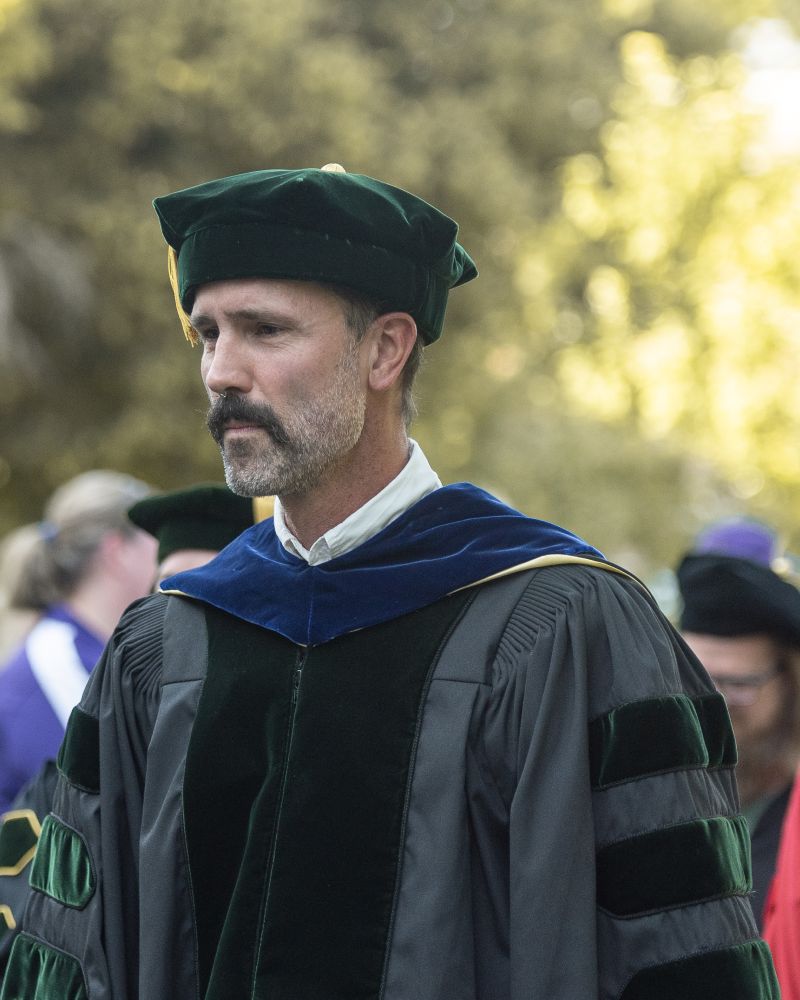
Scott Knickerbocker

As a teacher, I want my students to have good ideas – original, creative, and carefully wrought ideas worth defending and developing. Good ideas sprout from careful thinking and deep attention. My indirect goal is to encourage students, in practicing close reading of literary texts, to become more observant and intelligent “readers” of the world around them in general. Musically, I write original songs meant to move one to re-see the world as wondrous. I also enjoy digging in the rich soil of “old, weird America” – whimsical country blues finger-picked on guitar, haunting ballads frailed on banjo, and spirited old-time dance tunes played on fiddle.  Beyond the classroom and stage, I enjoy going on outdoor adventures – ultramarathon trail running, mountain biking, kayaking, backcountry skiing, and backpacking with my family and dog. EDUCATION Ph.D., English, University of Oregon M.A., English, University of Oregon B.A., English and Biology, Principia College PROFESSIONAL EXPERIENCE I have taught literature and writing since 1999 (and at The College of Idaho since 2007). I have written a book about poetry and various scholarly articles on literature and music. Currently I teach classes in American literature, outdoor education, and songwriting. I have also been a professional musician for over twenty years. I sing and play guitar, banjo, and fiddle, and I regularly perform both solo and with my trio The Knickerbocker Band. https://www.facebook.com/ScottKnickerbockerMusic. SCHOLARSHIP & RESEARCH Ecopoetics: The Language of Nature, the Nature of Language (http://www.umass.edu/umpress/title/ecopoetics) “‘Bodied Forth in Words’: Sylvia Plath’s Ecopoetics.”  College Literature 36.3 (Summer 2009) “Green Banjo: The Ecology of Old-Time Music.”  Oxford Handbook of Ecocriticism. Oxford University Press.  2014   “Emily Dickinson’s Ethical Artifice.”  Interdisciplinary Studies in Literature and the Environment 15.2 (Summer 2008) “Organic Formalism and John Witte’s The Hurtling.”  The Kenyon Review. August 2008.  https://kenyonreview.org/kr-online-issue/2008-summer/selections/organic-formalism-and-john-wittes-the-hurtling/ “Profile.”  An Ear to the Ground: Presenting Writers from Two Coasts.  Ed.  Scott C.  Davis.  Seattle: Cune Press, 1997.  245-46. “Skiing with Papa: Teaching Hemingway in the Backcountry Snow.”  Teaching Hemingway and the Natural World. Kent State University Press.  2018.

Explore More
  • By Henry Miller

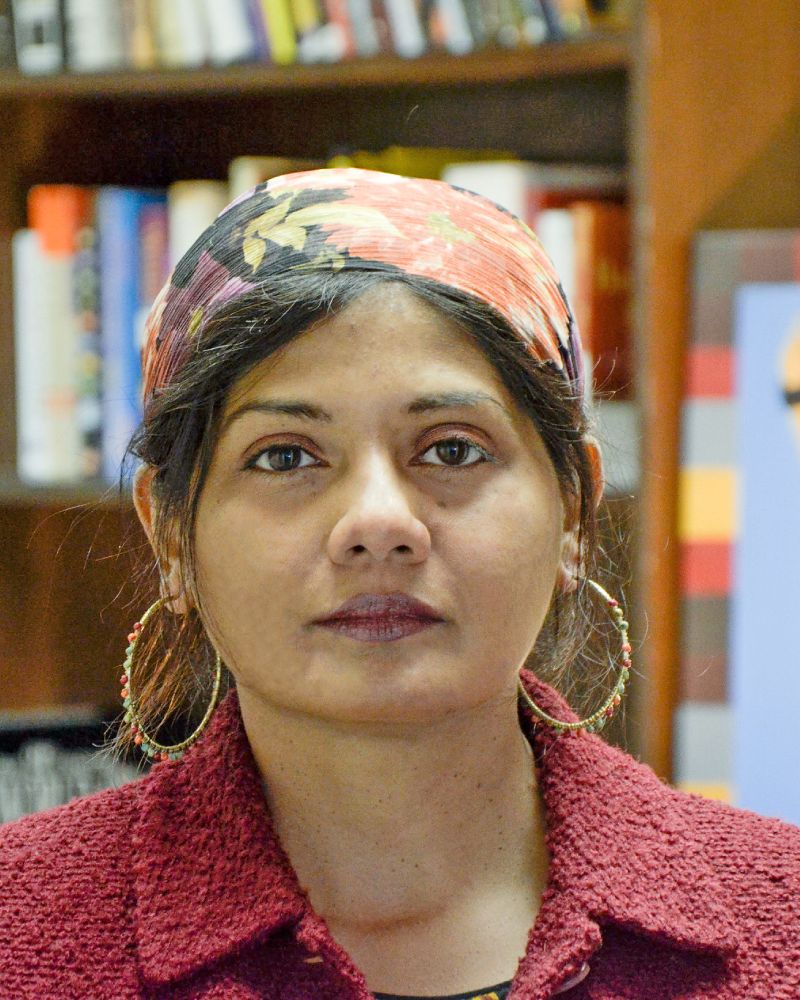
Maimuna Islam

Dr. Maimuna Islam’s expertise is in postcolonial, transnational, and immigrant literature and human rights and social justice, with emphasis on the histories and politics of South Asian and Middle Eastern cultures and societies through literature. EDUCATION Ph. D., University of Denver M. A., University of Colorado at Boulder B.A., Ohio Wesleyan University

Explore More