What can we help you find?

Edit Template
  • By Henry Miller

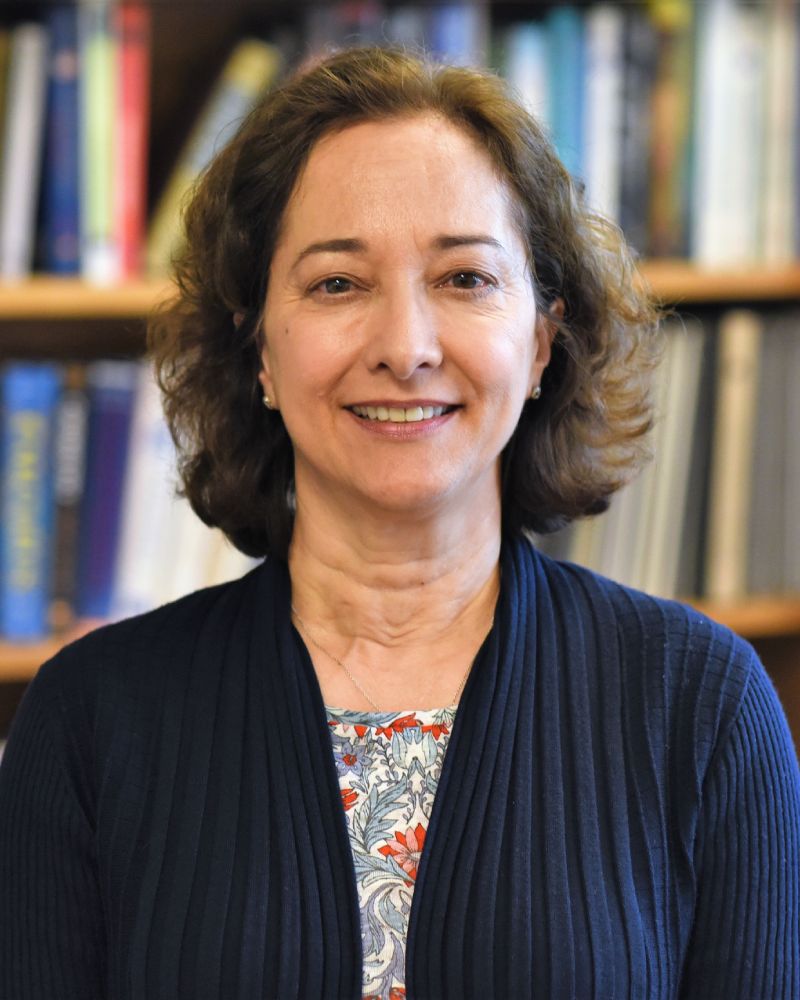
Jennie Daniels

I teach a variety of classes at the C of I, including Spanish language, Food and Culture, and advanced courses on the study of literature and culture. Courses like Democracy and Dictatorship, Indigenous Studies, Crime Fiction, and Medical Humanities dove-tail with my research interests in the representation of social exclusion and marginalization. I also often lead study away experiences to Spanish-speaking countries during January term, which is a great way to get to know students and encourage their language development. When I am not teaching, I enjoy traveling, reading, hiking, and exploring Idaho. A variety of professional experiences have influenced the development of my research and career. After from graduating college, I worked as a Behavioral Consultant for people with developmental disabilities in San Diego County, and investigated sea life encrusted on boat hulls in California and Baja California, Mexico. During graduate school at the University of California, San Diego, I taught Peninsular and Latin American literature courses and Spanish language. Prior to joining the faculty at the C of I, I taught Spanish, Portuguese, and Peninsular Literature at Olivet Nazarene University in Bourbonnais, IL. EDUCATION Ph.D. Literature, University of California, San Diego M.A. Latin American Studies, University of California, San Diego B.A. Spanish, General Psychology, Point Loma Nazarene University SCHOLARSHIP & RESEARCH Anything but Novel: Pushing the Margins in Latin American Post-Utopian Historical Narrative. The University of Alabama Press, 2023 “Best Practices in Language Instruction: For Whom Are They Best?” The Currere Exchange Journal, 5.1, 2021. “Access and Allies: Indigenous Water Rights and Necrocapitalism in Arregui’s El facilitador.” Romance Notes, 60.2: 337-347, 2020. “Redefining Borders: The Desert in Argentine Literature.” In The Conquest of the Desert: Argentina’s Indigenous Peoples and the Battle for History, 1878-present. Carolyne Ryan Larson, Ed. Albuquerque: U New Mexico P, 2020. “¿Crimen y castigo? La justicia y los juicios en dos filmes argentinos”. Chasqui: Revista de literatura latinoamericana, 47.1 (May 2018): 195-205. “Intervenciones en la calle, intervenciones en el aula: El arte urbano quiteño”. Hispania, 99.2 (June 2016): 246-257. Review of Screening Neoliberalism: Transforming Mexican Cinema 1988-2012, by Ignacio M. Sánchez Prado. Rocky Mountain Review of Language and Literature, 70.2 (2016): 217-219. “Resistance as a Transnational Construct: The Intellectual and Marginalization in Varas’s El correo de Bagdad.” Confluencia, 31.1 (Fall 2015): 28-41. “Elite in Crisis: The Marginalized as a Site of Resistance in La ciénaga and Coronación.” Delaware Review of Latin American Studies, 14.1 (August 30, 2013). “Travelers in the Margins: Post-dictatorship, Economic Reform and Solidarity in João Gilberto Noll’s Hotel Atlântico and Osvaldo Soriano’s Una sombra ya pronto serás.” A contracorriente, 10.3 (May 2013): 389-419.

Explore More
  • By Henry Miller

Carolyn Dadabay

My expertise is in biochemistry, cell signaling pathways, and bioactivity of polyphenolic compounds. Being on the faculty at The College of Idaho is very rewarding and enjoyable. I have the opportunity to interact daily with bright and interesting students in my courses and labs. In my research group, students develop skills in pursuing independent laboratory research, and produce impressive and valuable data. EDUCATION Ph.D., Washington University, St. Louis, Biochemistry B.A., Kalamazoo College, Chemistry and Biology PROFESSIONAL EXPERIENCE 2006-Present, Assistant Professor, Chemistry Department, The College of Idaho 2005-2006, Instructor, Chemistry Department, The College of Idaho 2004-2005, Adjunct Professor, Chemistry Department, The College of Idaho 1996-1998, Environmental Protection Specialist, United States Army 1990-1993, Post-doctoral Fellow, Department of Biochemistry, University of Washington

Explore More