What can we help you find?

Edit Template
  • By Henry Miller

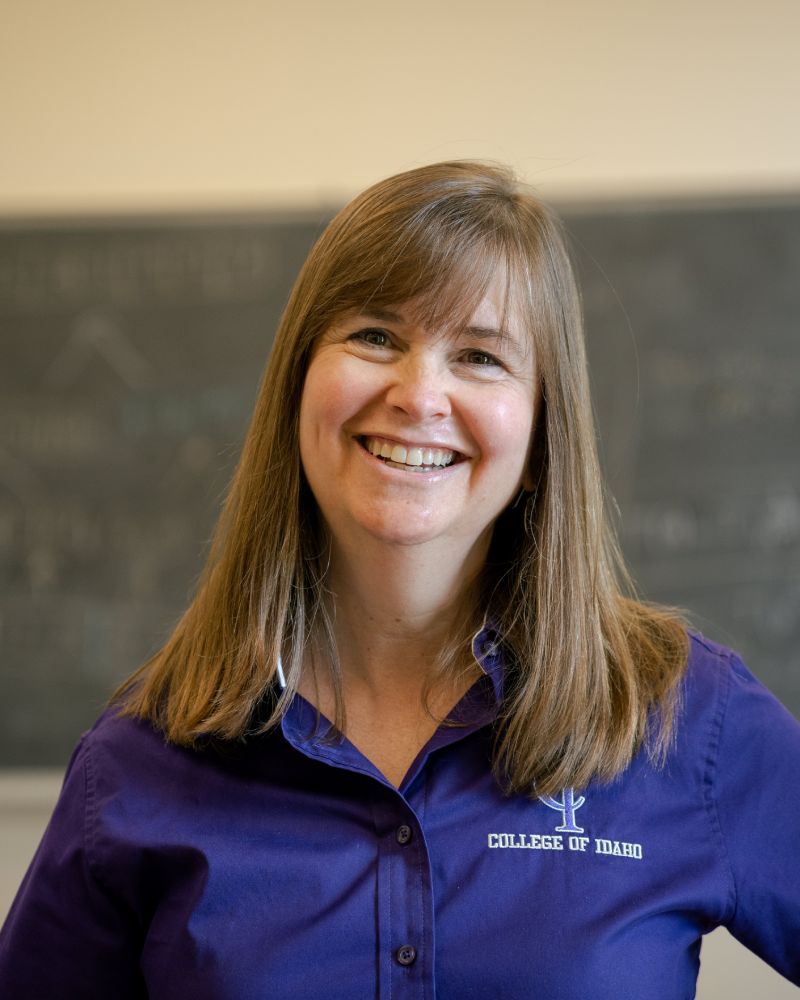
Lynda Danielson

Lynda Danielson has been teaching mathematics and computer science at The College of Idaho since 1995. Dr. Danielson enjoys advising the Math Club which sponsors various annual events including Pi Day each March 13 and the Putnam Examination each December. EDUCATION PhD, Mathematics, Oregon State University (1995) MS, Mathematics, Oregon State University (1992) BS, Mathematics, The College of Idaho (1989)

Explore More
  • By Henry Miller

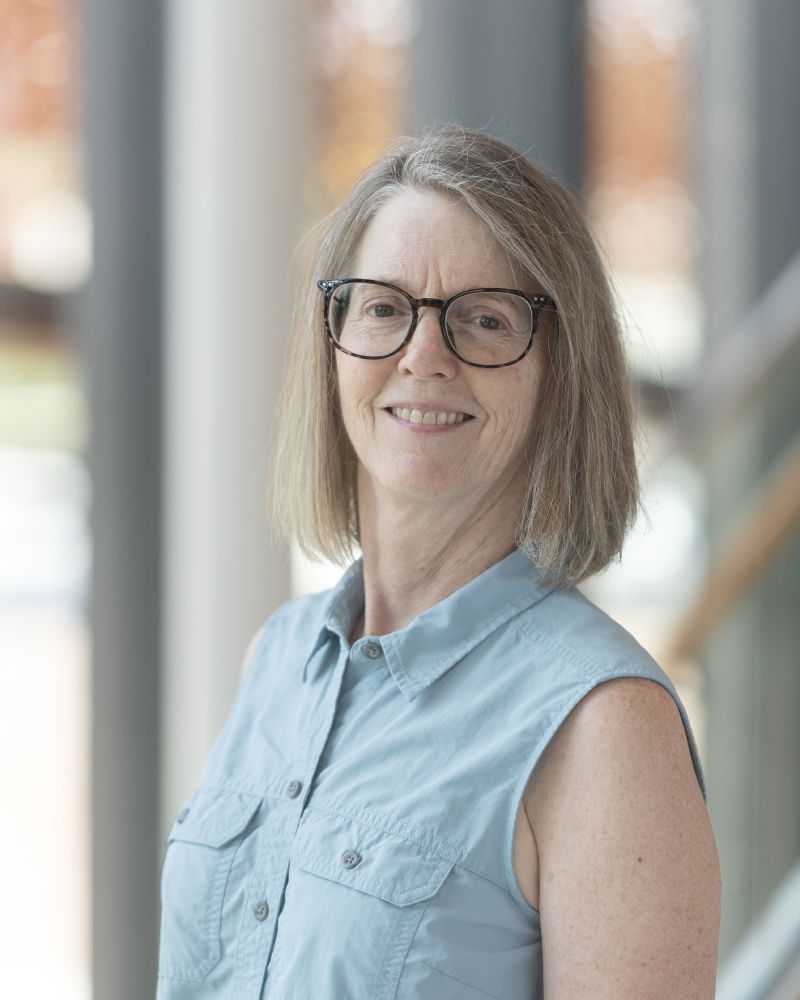
Amy Truksa

I thoroughly enjoy the opportunity to help my audiences become aware of the patterns, rhythms, and processes of universe. In teaching math, I find the same reward in helping my students see and understand the patterns in mathematics. My connections with The College of Idaho are many: my father, Gary Strine, was a professor of physics for 30 years; I am an alumnus of the college; and my husband, Scott Truksa, is both an alumnus and a professor of chemistry. EDUCATION M.A.T. Science Education, Oregon State University (1992) B.S. Biology, The College of Idaho (1989) A.A., Cottey College (1986) PROFESSIONAL EXPERIENCE 2011-current Senior Lecturer, Mathematics Department, The College of Idaho 2000-current Planetarium Director, Whittenberger Planetarium, The College of Idaho 1999-2005 Program Resource Director, Sawtooth Methodist Camp, Sawtooth Mountains of Idaho 1998-1999 Adjunct Faculty, Mathematics Department, The College of Idaho 1994-1996 Science Teacher, Caldwell Alternative High School 1993-1994 Discussion Leader, Exchange program between Oregon State University and Asia University, Japan 1992-1994 Science Substitute Teacher, Albany, Alsea, and Corvallis, OR 1992-1994 Saturday Academy Programs, Oregon State University 1992-1993 Co-chair: “Expanding Your Horizons” Workshop, Association of Women in Science 1990-1991 Veterinary Technician, Linn Veterinary Hospital, Albany, OR 1989-1990 Independent Contractor, Bureau of Land Management, Boise, ID; Interagency Scientific Spotted Owl Committee, Portland, OR 1989 Hunting Check Station Manager, Idaho Fish and Game, Boise, ID

Explore More
  • By Henry Miller

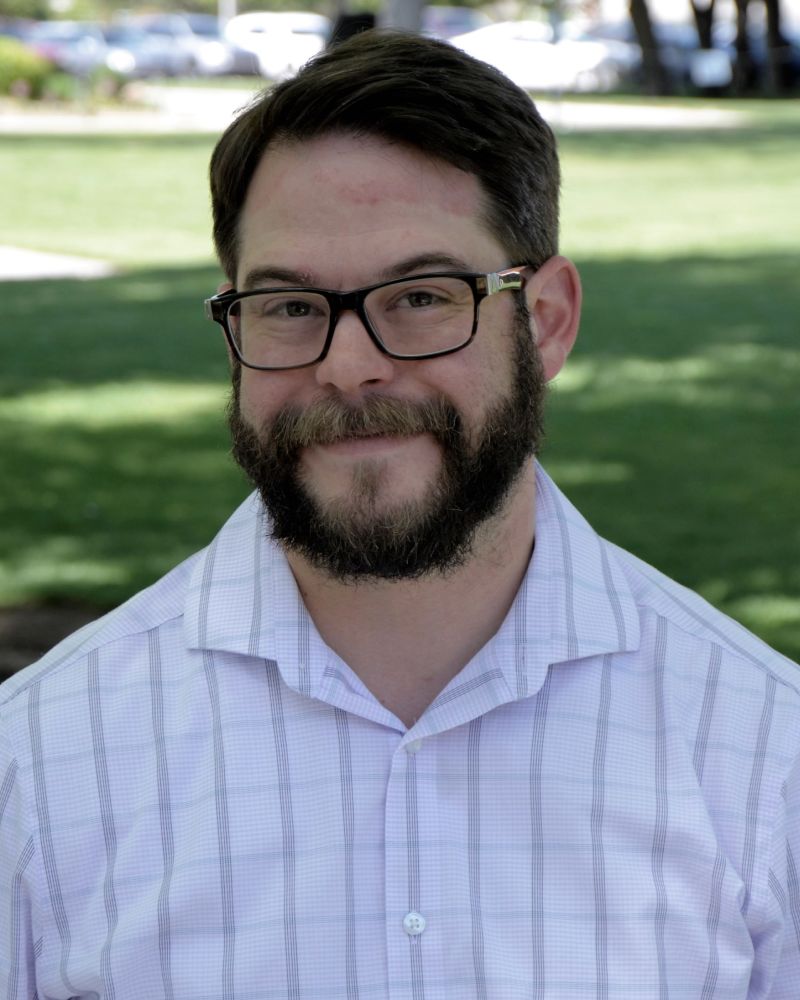
David Rosoff

Dave Rosoff joined the department in the fall of 2011. His mathematical specialty is algebraic homotopy theory, which is the use of topological methods and reasoning to study purely algebraic objects. Dr. Rosoff is delighted to be able to work with the small classes of dedicated students at The College of Idaho. EDUCATION Ph.D. Mathematics, University of Washington (2009) M.S. Mathematics, University of Washington (2007) B.A. Mathematics, Reed College (2002)

Explore More
  • By Henry Miller

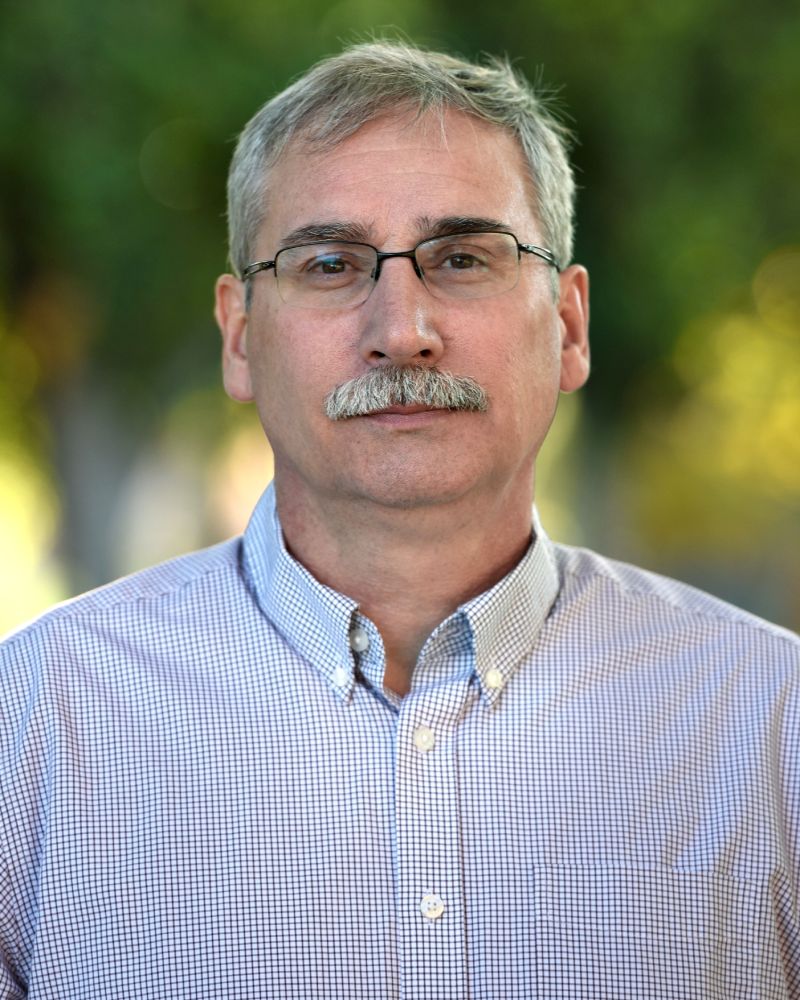
Andrew Phillips

Dr. Andrew Phillips is a lecturer of mathematics at The College of Idaho.  Dr. Phillips earned a bachelor’s degree in mathematics at the University of Connecticut and a Ph.D. in mathematics from Boston College. EDUCATION Ph.D., Mathematics, Boston College, 2015 B.S., Mathematics, University of Connecticut, 2010

Explore More
  • By Henry Miller

Jim Dull

James Dull began lecturing at The College of Idaho in 1998. His scholarly interests include small-telescope observations concentrating on variable stars, telescope automation, and astronomy education. The physics faculty offer several opportunities to students to join in with astronomy research. Dr. Dull invites students to participate in variable star research so they can; improve their understanding of scientific methods, learn how computers aid image analysis, and develop modern telescope techniques. What Dr. Dull appreciates the most about teaching at The College of Idaho is his students’ willingness to participate in class and their dedication to rigorous study. EDUCATION PhD, Astrophysics, Indiana University (1996) MS, Physics, Washington State University (1986) BS, Astrophysics, University of New Mexico (1983)

Explore More
  • By Henry Miller

Kathryn Devine

I am an observational astronomer. My primary research interests are star formation and the interstellar medium. I obtained my PhD in Astronomy at the University of Wisconsin-Madison, although I spent part of my graduate school career at the National Radio Astronomy Observatory’s Very Large Array radio telescope. The Physics faculty offer several opportunities for students to join ongoing research projects or create their own independent studies.  By working on research in the physics department, students can gain experience with computer programming, data analysis, and scientific writing. EDUCATION Ph.D., Astronomy, University of Wisconsin, 2010 M.S., Astronomy, University of Wisconsin, 2005 B.A., Physics and Astronomy, Carleton College, 2002 SCHOLARSHIP & RESEARCH A complete list of Dr. Devine’s publications is available here: https://orcid.org/0000-0002-3723-6362.

Explore More