
What can we help you find?

Edit Template
Stelios-Panageo-People
  • By Henry Miller

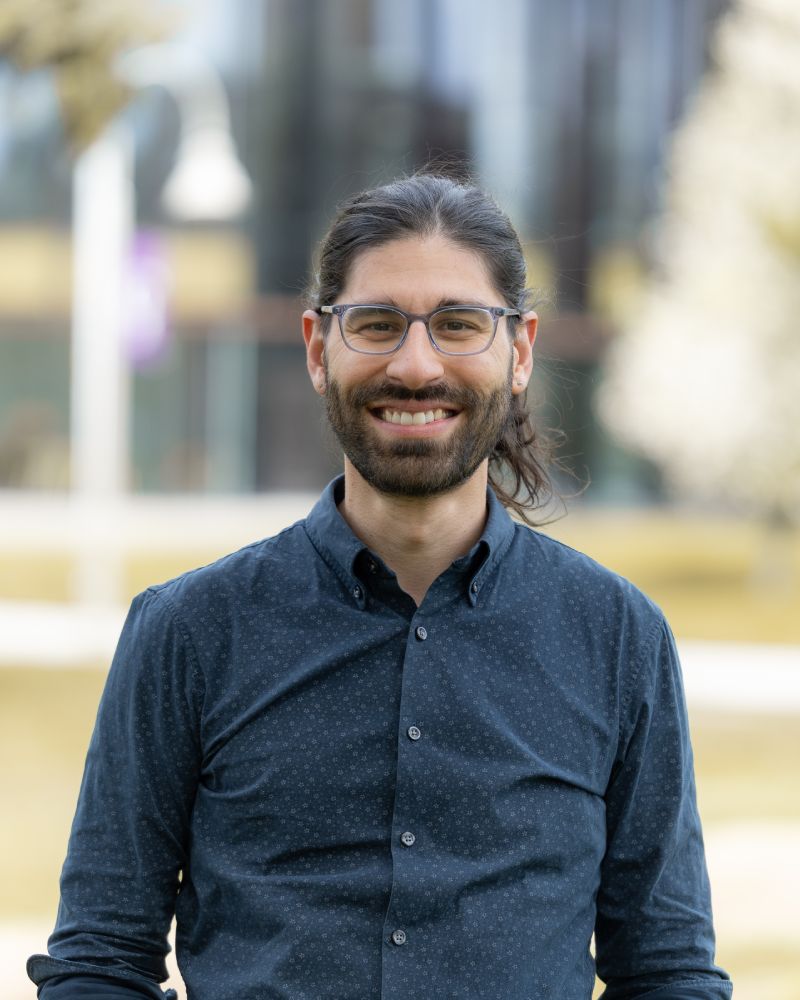
Stelios Panageotou

Always questioning why things are the way they are, I studied Sociology at the University of Tampa and graduated with a doctorate at the University of Tennessee with a specialty in Political Economy. I began to situate my research at the intersection of the capitalist economy and the democratic political system. At the same time, I became captivated by Critical Theory as a way to explain the divergence between the surface features of society and the subterranean, hidden logics that underlie modern societies. I applied these research interests to the emerging Greek financial crisis and developed a theory of the “crisis management regime” that imposed austerity upon the nation’s people in exchange for interest-bearing loans deceptively called bailouts. I traveled to Athens for months during the peak of the crisis in 2015 to pursue an ethnographic study of the crisis management treatment and its deleterious effects on the Greek people. I challenged the mainstream narrative that Greece’s unsustainable debt was accumulated through profligacy and instead argued that it resulted from a structured power imbalance that benefited the core, Northern European economies at the expense of Greece’s economy. I published this work in the Review of Radical Political Economics and compared the management of Greece’s financial crisis to that of the Latin American debt crises of the 1970s and 1980s in an article published in Comparative Sociology. I have since shifted my research focus to the United States and study the ways in which corporations and humans practice politics, as well as the sources of corporate political power. Challenging mainstream narratives on the Trump presidency, my co-author (Dr. Joel Crombez) and I rethink the governance style of Donald Trump and argue that it exemplified the logic of the personal brand whose actions are intended to accrue symbolic capital. I am now working on a research project that de-centers the human from democracy and instead positions corporations at the center of the American democratic process. Elements of this larger research project have been published in The SAGE Handbook of Political Sociology and Logos: A Journal of Modern Society and Culture. I was attracted to the College of Idaho because of its commitment to the liberal arts tradition and its emphasis on the close mentoring relationship between professor and student. My approach to teaching is to design cutting-edge Political Economy classes that have never been taught before but capture the unique political economic moment through which we exist. I blend an emphasis on the classics of Political Economy with contemporary, critical approaches to the field. My classroom experience is intended to teach the content of the discipline as much as it seeks to cultivate personal growth and reflection among students. EDUCATION Ph.D., University of Tennessee-Knoxville M.A., University of Tennessee-Knoxville B.A., University of Tampa SCHOLARSHIP & RESEARCH Panageotou, Steven, and Joel Crombez. 2020. “The United States of Trump Corp.: The ‘Not Normal/New Normal’ Governing Style of a Personal Brand.” Fast Capitalism 17(1). DOI:10.32855/fcapital.202001.003. Panageotou, Steven. 2018. “Corporate Power in the Twenty-First Century” in The SAGE Handbook of Political Sociology, edited by William Outhwaite and Stephen Turner. Thousand Oaks, CA: SAGE. Panageotou, Steven. 2017. “Disciplining Greece: Crisis Management and its Discontents.” Review of Radical Political Economics 49(3): 358-374. DOI: 10.1177/048661341770397. Panageotou, Steven. 2015. “No Democratic Theory Without Critical Theory.” Logos: A Journal of Modern Society and Culture 14(2-3). Panageotou, Steven, and Jon Shefner. 2015. “Crisis Management and the Institutions of Austerity: A Comparison of Latin American and Greek Experiences.” Comparative Sociology 14(3): 1-27.

Explore More
  • By Henry Miller

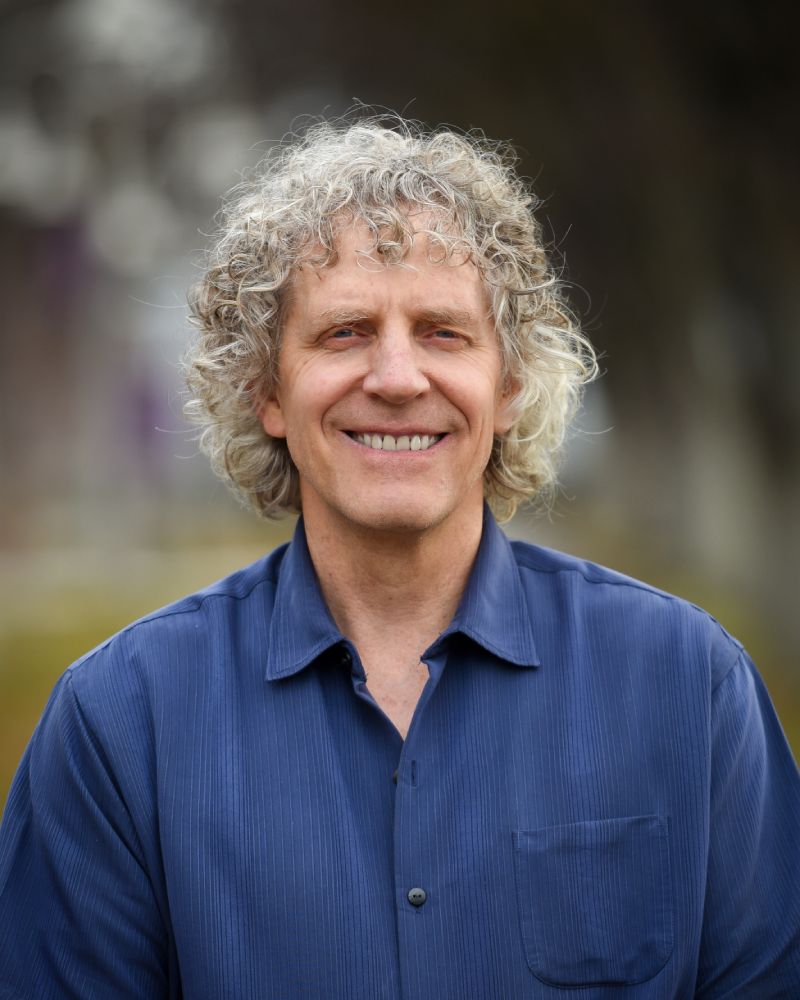
Kerry Hunter

“Dr. Hunter bends minds like bodybuilders bend aluminum coke cans—that is to say, quite easily. Actually, this is a weak analogy because when bodybuilders bend coke cans the cans are useless post-bending. When Hunter bends minds, they become more useful. Maybe he’s more like a ripped blacksmith bending steel?” —Anonymous Student I’m no blacksmith. Nor am I trying to bend minds. Socrates is my mentor—even though I am not old enough to have actually met him in person, as some of my current students would have you believe. Like Socrates, I see teaching as a form of midwifery. Through much labor, I help students give birth to new ideas and new discoveries. I could “teach” no other way. For over thirty years, no two classes have been the same. Each term there are different students giving birth to new discoveries and new ideas. Thankfully, unlike for Socrates, who got himself killed for “corrupting the youth” in ancient Athens, The College of Idaho has proven a supportive place for me to practice my calling. With luck, I will last another thirty years. EDUCATION Ph.D., University of Washington M.A., University of Washington B.A., Utah State University PROFESSIONAL EXPERIENCE I earned my Ph.D. from the University of Washington and began teaching at The College of Idaho in 1988. I have been here ever since. In 2008, I was named Idaho Professor of the Year by the Carnegie Foundation for the Advancement in Teaching. I teach courses in political philosophy and constitutional law and hold a biannual Mock Supreme Court course in which nine students are selected to play the role of a current justice on the U.S. Supreme Court. For this course, the students study cases currently before the Court, hear oral arguments by practicing attorneys in the area, and write opinions as if they were sitting on the Court. Students find this course particularly challenging and rewarding. Past participants include Rhodes, Marshall, and Truman Scholars. During my sabbatical in 2009, I visited New Zealand where I engaged with journalists, members of the public in urban and rural settings, law professors, representatives of diverse political movements, multiple government officials—including two former prime ministers, one of which is the author of New Zealand’s bill of rights, and one future prime minister, Jacinda Ardern. This visit was part of my effort to experience a political culture radically different from that of the U.S. in that New Zealand refuses to grant courts power to overturn acts of the legislature. Upon returning to the U.S., I have published several articles in leading New Zealand law journals debating the issue of whether New Zealand should adopt an American-style constitution. SCHOLARSHIP & RESEARCH The Reign of Fantasy: The Political Roots of Reagan’s Star Wars Policy (1992) The Role of the Supreme Court in American Political Culture: Preserving the Founding Myths (2006) Approaching the U.S. Constitution: Sacred Covenant or Plaything for Lawyers and Judges (2014 and 2016)

Explore More