What can we help you find?

Edit Template
  • By Henry Miller

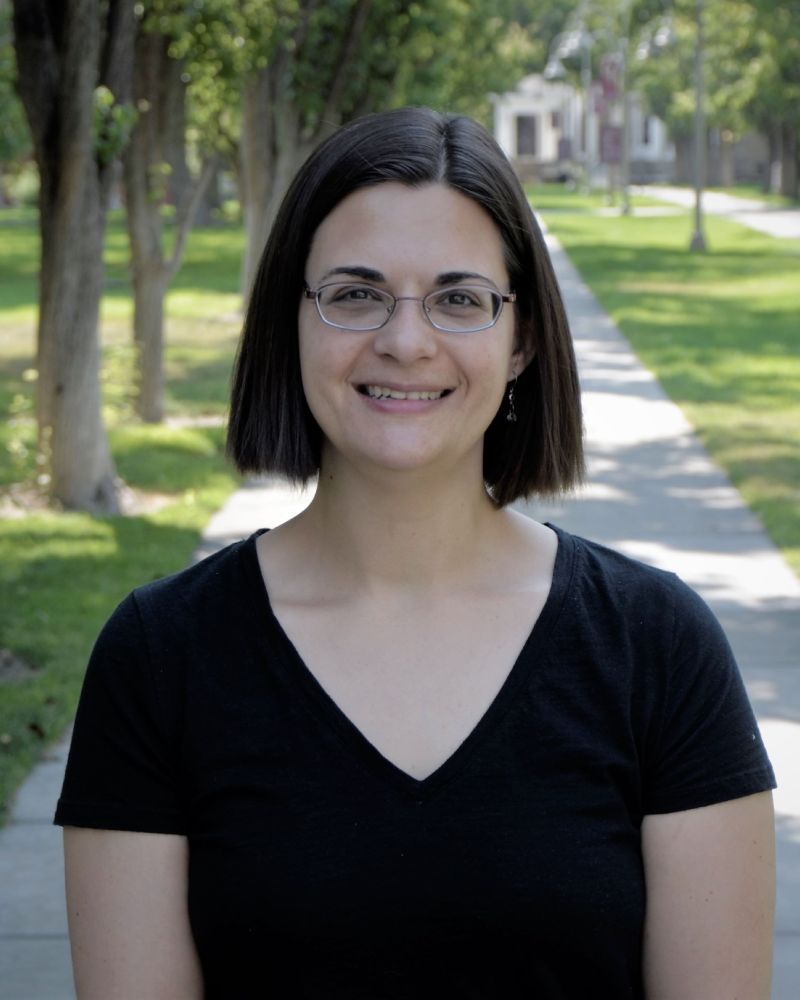
Jen Wallin-Ruschman

I teach courses in community psychology and research methods. I view learning and knowledge production as a collaborative and participatory process. An action orientation is also central to my work, my courses center real-world application and project-based learning. As a community-based researcher, the topics I investigate shift with the community I am working with and their identified needs. However, my approach to research is always rooted in respect for multiple ways of knowing and the experiences of research participants. I mix methods when conducting research but I often focus more on qualitative methodologies, including focus groups, photovoice, open-ended surveys, and interviews. In my role as Hansberger Chair of Community Collaboration and Engagement, I’ve been able to join a range of community groups to help make connections between the college and the community. I live with my partner and two young daughters in Boise. I love coffee, dessert, and fantasy books. I enjoy training for triathlons and camping. EDUCATION Ph.D., Applied Psychology, Portland State University M.S., Psychology, Portland State University B.A., Sociology, Psychology, Biology, University of Louisville PROFESSIONAL EXPERIENCE 2025-Present – Full Professor, The College of Idaho 2022-Present – Hansberger Chair of Community Collaboration and Engagement, The College of Idaho 2020-2025 – Associate Professor, The College of Idaho 2016 – 2020 – Assistant Professor, The College of Idaho 2013 – 2016 – Assistant Professor, Abraham Baldwin Agricultural College SCHOLARSHIP & RESEARCH Selected Publications: Patka, M., Murry, A. Wallin-Ruschman, J., & Sabt, M. (2023). Critical Consciousness: The Mixed Effect of Sense of Community on Sociopolitical Action. Journal of Student Affairs Research and Practice. Patka, M., Wallin-Ruschman, J., Al Rahma, B. A., Zar, A.^, bin Nauman, H.^, Sharif, J. M^….Khanam, Z.^. (2021). Special Olympics Pakistan: Using a Segregated Space to Transition to Independence in Mainstream Settings. Disability & Society, 37(10), 1591-1613. Wallin-Ruschman, J., Price., A.*, Richey, C.*, & Carns, K.* (2020). Reflections and results from the intersections: Teaching and learning the praxis of intersectionality in the psychology classroom. Journal for Social Action in Counseling and Psychology, 12(1), 13-26. Wallin-Ruschman, J., Lichty, L., & Palamaro-Munsell, E. (2019). Introduction to the Special Issue Volume 2: Developing Undergraduate Community Psychology Pedagogy and Research Practice, Global Journal of Community Psychology Practice, 10(2). Retrieved from https://www.gjcpp.org/en/article.php?issue=32&article=189 Patka, M., Wallin-Ruschman, J., Murry, A. & Minich, N. (2018). Exploring sense of community as a predictor of critical consciousness among youth in Ukraine. Global Journal of Community Psychology Practice, 9(1), 1-17. Wallin-Ruschman, J. (2018). “I thought it was just knowledge but it’s definitely a lot of guts”: Exploring emotional and relational dimensions of critical consciousness development. The Urban Review, 50(1), 3-22. Wallin-Ruschman, J. & Pataka, M. (2016). Learning from critical collective spaces: Reflections on the community-diversity dialectic in safe spaces. Journal of Social and Political Psychology, 4(1), 318-331. * Student co-authors SPEAKING ENGAGEMENTS Selected Talks: Wallin-Ruschman, J., Casabar, T.*, LePiane, S.*, Aquino, M.* (2025). Community Engaged Learning in the Classroom: Students and Instructors Reflect and Explore Impact. Presented at the Society for Community Research and Action Biennial Conference, Lansing, MI. [Panel Organizer] Wallin-Ruschman, J., Ellison, E., Rade, C., & Bielecki, S. (2023). Community Psychology for strategic transformation of institutional community engagement efforts. Presented at the Society for Community Research and Action Conference, Atlanta, GA. Illanes, K.*, Horton, C.*, Mamba, B.*, Stanciu, J.*, Mbahoze, D.*, Wallin-Ruschman, J., & Heidrich, M. (2022). Campus culture: Exploring perceptions of safety at the College of Idaho. Presented at the Community Research and Action in the West Conference. Online Conference. Cheesewright, K., Blackwell, S., Wallin-Ruschman, J., Rahimatpure, N.*, & Emele, M.* (2021). Speaking through the power of our difference: Performance, pedagogy, intersectionality, racism. Presented at the Society for Community Research and Action Conference, online conference. Cabrera, G., Fox., S., Palamaro-Munsell, E., & Wallin-Ruschman, J. (2020). A Seat at the table: Exploring benefits and challenges of undergraduate research. International Conference of Community Psychology. Online Conference. Weiss, L.*, Wallin-Ruschman, J., Harness, V.*, Hamilton-Rubio, S.* & Heidrich, M. (2019). Exploring experiences of dynamic diversity on campus: A student-led focus group project part of the College as a site of community inquiry: Undergraduates researching undergraduate experiences symposium. Presented at the Society for Community Research and Action Conference, Chicago, IL. [Panel Organizer] McGraw, J*., Black, R*., Wallin-Ruschman, J., & Heidrich, M. (2017). Exploring student experiences of the PEAK curriculum at the College of Idaho. Presented at Higher Education Data Sharing Consortium Conference, Cincinnati, OH. Wallin-Ruschman, J., Allegood, V.*, Grim, J.*, & Langston, B.* (2016). Understanding emotions and relationality in the development of critical consciousness in rural contexts. Presented at The Society for the Psychological Study of Social Issues Conference, Minneapolis, MN. Wallin-Ruschman, J., (2013) Critical Consciousness in a Capstone Classroom: Understanding the role of critical pedagogy, community-based learning, and emotions part of the Critical consciousness-raising: Comparing strategies across academic and community settings symposium. Presented at Society for Community Research and Action Biennial, Miami, FL. [Panel Organizer] * Student co-authors

Explore More
  • By Henry Miller

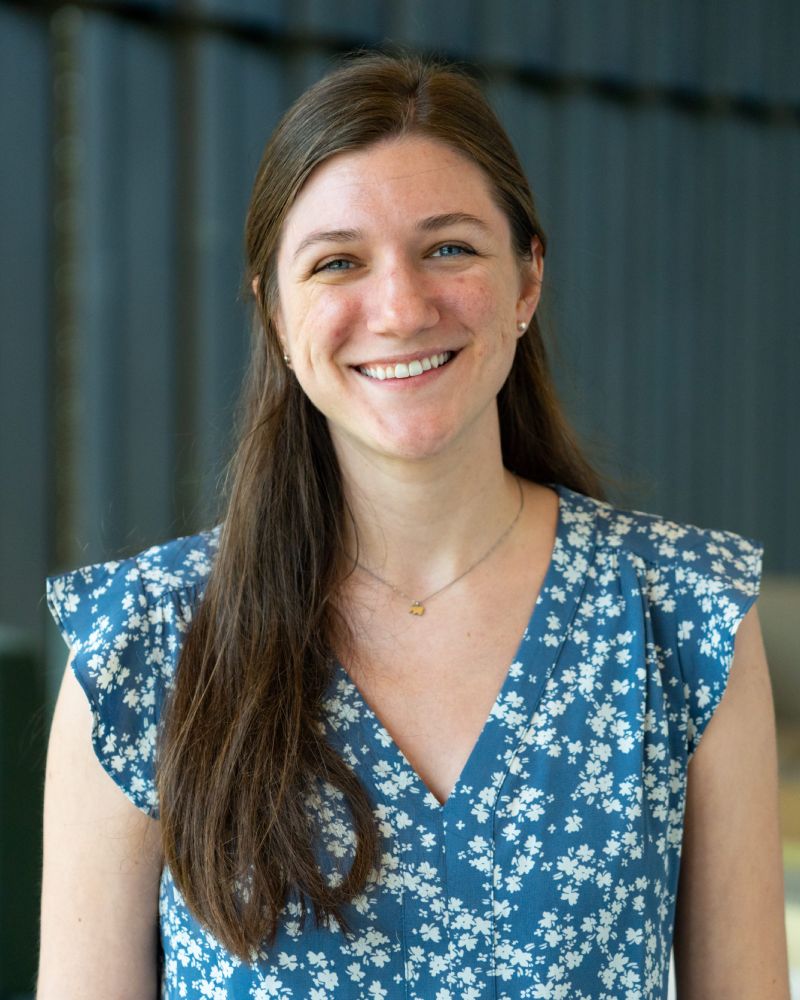
Ruth Tincoff

I teach courses on developmental and cognitive psychology, general psychology, and psychological science/research methods. My teaching philosophy is borrowed directly from what we have learned about human cognition and development – we are naturally curious information seekers. For students taking classes with me, your curiosity, what you already know, and the work you do with me and other students are all essential parts of your learning. In my research, I investigate how infants understand words before they can talk. I examine how infants use perceptual and social cues from caregivers to build the beginnings of their comprehension vocabulary. I also examine how caregivers and infants together create dynamic social events (e.g., feeding or dressing routines) that are the ecology for language development. Students are essential collaborators on this research and learn a variety of scientific and practical skills. You can click here to learn more about the Parent & Baby Project. EDUCATION B.A., 1994, Wayne State University, Honors Psychology and Linguistics Ph.D., 2001 and M.A., 1998, Johns Hopkins University, Cognitive Developmental Psychology Postdoctoral Fellow, 2001 – 2004, Harvard University, NIH Individual Postdoctoral National Research Service Award SCHOLARSHIP & RESEARCH Seidl, A., Tincoff, R., Baker, C., & Cristia, A. (2015). Why the body comes first: effects of experimenter touch on infants’ word finding. Developmental Science, 18(1), 155–164. doi: 10.1111/desc.12182. Tincoff, R. & Jusczyk, P.W. (2012). Six-month-olds comprehend words that refer to parts of the body. Infancy, 17(4), 432-444. doi: 10.1111/j.1532-7078.2011.00084.x. Tincoff, R., Hauser, M., Tsao, F., Spaepen, G., Ramus, F., & Mehler, J. (2005). The role of speech rhythm in language discrimination: Further tests with a nonhuman primate. Developmental Science, 8(1), 26-35. doi: 10.1111/j.1467-7687.2005.00390.x. Tincoff, R. & Jusczyk, P. W. (1999). Some beginnings of word comprehension in six-month-olds. Psychological Science, 10, 172-175. doi: 10.1111/1467-9280.00127. Reprinted in D. Muir & A. Slater (Eds.), Infant development: The essential readings (pp. 270-278). Oxford, UK: Blackwell Publishers, 2000. Treiman, R., Tincoff, R., Rodriguez, K., Simou-Mouzaki, A., & Francis, D. J. (1998). The foundations of literacy: Learning the sounds of letters. Child Development, 69(6), 1524-1537. Treiman, R., Goswami, U.,  Tincoff, R., & Leevers, H. (1997). The effects of dialect on American and British children’s spelling. Child Development, 68(2), 229-245.

Explore More
  • By Henry Miller

Courtney Ricciardi

I am an applied developmental psychologist with a focus on how we develop in academic settings. Broadly I investigate two questions. First, I investigate how our identities influence our academic experiences and decisions. For example, I ask questions about how one’s math identity influences course taking decisions and how identity characteristics like gender, race, and socioeconomic status influence academic experiences. Second, I research how academic settings influence our development. For example, some of my current projects focus on how preschool type and early school readiness skills influence later course selection, how different features of school settings influence one’s sense of belonging, and how student-athletes balance their competing identities while at college. However, my true passion is teaching and I love teaching and learning from my amazing students. I routinely teach Developmental Psychology, Adolescent Development, Multicultural Psychology, Critical Thinking and Psychological Science, and a special topics winter course on Identity Development. My approach to teaching is heavily influenced by my research and I strive to help students draw personal connections to the material. I live in Meridian with my husband and enjoy reading, knitting, DnD, doing yoga and eating lots of snacks. Feel free to stop by for a snack or a chat anytime. EDUCATION Ph.D. Applied Developmental psychology, George Mason University 2021 M.A. Applied Developmental Psychology, George Mason University 2018 B.S. Psychology, The University of Alabama 2016 SCHOLARSHIP & RESEARCH Selected Research Work: Ricciardi, C. & Winsler, A. (2024). Trajectories of advanced math taking for low-income students of color in middle and high school. Contemporary Educational Psychology, 79, 102312. https://doi.org/10.1016/j.cedpsych.2024.102312 Ricciardi, C., Winsler, A., Manfra, L., Hartman, S., Bleiker, C., & Dinehart, L. (2021). School readiness skills at age four predict academic achievement through 5th grade. Early Childhood Research Quarterly, 57(4), 110-120. https://doi.org/10.1016/j.ecresq.2021.05.006 Ricciardi, C. & Winsler, A. (2021). Who gets in?: Selection into advanced courses in middle and high school among low-income, ethnically diverse youth. Journal of Advanced Academics, 37(3), 291-323. https://doi.org/10.1177/1932202X21990096 Ricciardi, C., Haag-Wolf, A., & Winsler, A. (2020). Factors associated with gifted educational placement for low-income, ethnically diverse students. Gifted Child Quarterly, 64(4), 243-258. https://doi.org/10.1177/0016986220937685

Explore More
  • By Henry Miller

Timothy Lee

I am a social psychologist who examines intergroup relations in the U.S. Particularly, I am interested in how the dynamics of power, privilege, and inequity have created the racial position and function of Asian Americans. This interest has manifested into an examination of how beliefs about the racialized experiences of Asian Americans—such as the model minority myth (MMM; the belief that Asian Americans are intelligent and industrious) and perpetual foreigner stereotype (PFS; the belief that Asian Americans are unassimilable foreigners)—affect both Asian Americans and non-Asian Americans. Previously, I have examined (1) how exposure to information consistent with the MMM affects White Americans’ perceptions of Black Americans and support for affirmative action and (2) how ambiguous expressions of racism toward Asian Americans in the form of racial microaggressions differ from their unambiguous counterparts. I have also expanded my research beyond Asian Americans, investigating topics such as the effects of foreign language exposure on perceptions of immigrants in the U.S. and the emergence of new forms of sexism, like the Red Pill ideology (i.e., the belief that women have an “evolutionary” drive to be with “alphas” who are physically attractive and sexually successful). With the help of my research assistants, I am currently examining whether Asian Americans who adopt a preppy style—a style that originated in private Northeastern college preparatory schools and the Ivy League—are perceived as more American than those who do not. Given that Asian Americans have long been viewed as perpetual foreigners and “American” has often been equated with “White”, it is possible that Asian Americans who dress preppy are perceived as more American than those who do not. This research problematizes the notion of “American” by demonstrating how signaling particular cultural values and practices aligned with “Whiteness” may afford minoritized people “entry” into the American community. In sum, I am an intergroup relations researcher who is deeply interested in examining this set of issues from the perspectives of both Asian Americans and non-Asian Americans. EDUCATION Ph.D., Social Psychology, University of Kansas M.A., Psychology, University of Kansas B.S., Psychology, Trinity College SCHOLARSHIP & RESEARCH Including but not limited to: Lee, T., & Molina, L. E. (2023). “You’re overreacting!”: The ambiguity of Asian American microaggressions delegitimizes collective action. Asian Journal of Social Psychology, 26, 333–350. https://doi.org/10.1111/ajsp.12561 Lee, T., & Molina, L. E. (2021). “If you don’t speak English, I can’t understand you!”: Exposure to various foreign languages as a threat. Social Sciences, 10, 1–18. https://doi.org/10.3390/socsci10080308 Lee, T., & Outten, H. R. (2020). The effect of model minority myth salience on White Americans’ perceptions of Black Americans and their support for affirmative action. Psi Chi Journal of Psychological Research, 25, 2–13. https://doi.org/10.24839/2325-7342.JN25.1.2 SPEAKING ENGAGEMENTS Including but not limited to: Lee, T., & Ryu, Y. (2025, April). Navigating the model minority myth: Gendered expectations of masculinity and femininity in Asian Americans. In Y. J. Xiao (Chair), Rethinking Intersectional Identities Among Diverse AANHPI Communities. Symposium conducted at the Association for Asian American Studies Annual Conference 2025. Lee, T., & Ryu, Y. (2024, April). Model minority myth and perpetual foreigner stereotype: The gendered nature of Asian American stereotypes. In M. M. Lee (Chair), (Re)Connecting Psychology with Asian American Studies: Stereotypes, Discrimination, & Solidarity. Symposium conducted at the Association for Asian American Studies Annual Conference 2024. Lee, T., & Molina, L. E. (2021, August). “You’re overreacting!”: The subtlety of Asian American stereotypes delegitimizes collective action. In T. Lee (Chair), Subtle Racism, Identity, and Attitudes Toward Racialized Policies. Symposium conducted at the 2021 American Psychological Association Virtual Convention.

Explore More
  • By Henry Miller

Cara Laney

I am interested in social cognition – that is, how people influence each other’s thoughts, feelings, and memories. I am particularly interested in the intersections of social cognition and the law. That is, what social factors influence what people remember about crimes they have experienced or witnessed? What social information is used by the various parties in the legal system when they make decisions? I come from a liberal arts background, and really value the intellectual relationships between students and faculty that are so much more prevalent in this environment.  Please feel free to come and talk to me – my door is mostly open. I teach courses in cognitive psychology, research methods, introductory psychology, and the senior capstone course. I also supervise a variety of independent student research projects, and love to have students help me with my own research. I live in Ontario with my husband and young daughter. EDUCATION PhD 2006, University of California, Irvine, Psychology & Social Behavior MA 2004, University of California, Irvine, Social Ecology BA 2000, Reed College, Portland, OR, Psychology PROFESSIONAL EXPERIENCE 2013 – present, Professor, The College of Idaho 2011 – 2013, Visiting Assistant Professor, Reed College, Portland, OR 2010 – 2011, Visiting Assistant Professor, Wittenberg University, Springfield, Ohio 2007 – 2010, Lecturer in Forensic Psychology (British equivalent of Assistant Professor), University of Leicester, UK

Explore More
  • By Henry Miller

Krissy Graham

I have spent the last 15+ years working in behavioral health as a counselor for both substance use and mental health disorders. In 2013 I decided that when I needed a break from counseling I would move on to teaching at the college level, and here I am. I have always been the person who wants to know why someone thinks or acts the way they do, and I love to collect the stories. Being able to study and work in the various fields of psychology allows me to live my passion every day. EDUCATION B.A., Social Science (emphasis on communications and sociology), Boise State University, 2009 M.S., Psychology, University of Phoenix, 2014 Ph.D., Psychology, Northcentral University, 2021 SPEAKING ENGAGEMENTS National Association for Alcoholism and Drug Abuse Counselors, National Conference 2022 Texas Addiction Professionals Conference 2023 Local Continuing Education Seminars, 2021-present

Explore More
  • By Henry Miller

T.R. Brooks

I’m a perceptual psychologist, which means I study how the information out in the environment influences our behavior and experience. In particular, I study the interaction of visual and haptic (touch) perception. My research takes an “ecological” approach, which means it emphasizes how the environment and its physical forces and processes shape perceptual information before it reaches our sense organs. I favor dynamic systems models of human behavior, and recently have applied this approach to experiments in human-environment interaction. At The College of Idaho, I get to work with students that have a broad base of knowledge and experience, which is a perfect match for the multidisciplinary nature of my research. When not teaching or doing experiments, I like to cook, read science fiction, and tromp around in the mountains looking for cool rocks and mushrooms with my wife and two kids. EDUCATION Ph.D., University of Connecticut, Psychology (2018) HBA, University of Utah, Psychology (2007)

Explore More